Habitat - Indoor :: Tank Size and RES Size?

Turtle tank setups and other indoor configurations.

Post Posted: Sat Jul 15, 2006 8:30 pm   Tank Size and RES Size?

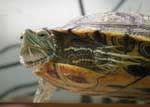
I was looking at the Photo Gallery, I think all of these tank set ups are real nice and perfect for the RES that are in them. What happens when they get real big? I am a new RES Owner and we adopted one that My sons found and he is way to big for a tank. I havent heasured him yet but A quick guess would be at least 10-12 inched that would end up being a 120 gallon tank, and I still think it is way to small for him. Do RES that are kept in captivity remain smaller than ones in the wild?
Mach529
 
Posts: 9
Joined: Jul 13, 2006
Location: Long Island, New York

Post Posted: Sat Jul 15, 2006 9:21 pm   

No, they grow just as large if they are kept in a healthy environment, (if not kept in a healthy environment they won't live long enough to reach that size... :() Many keepers have large ponds for the summer months, with temporary winter quarters indoors. This is good if you have the climate for it.

Another option that's good are stock tanks. They can be gotten from feed supply stores and are much more economical than glass tanks.


BTW, at that length 10-12 it sounds like "he" is she. Female RES grow to reach between 10-12 inches, while males only reach 7-9 inches. Also, females have short stubby front nails with a shorter tail while males have very long front claws with longer thick tails.
~~~Sonja~~~
sonyj
 
Posts: 1930
Joined: Jul 3, 2005
Location: Tennessee
Gender: Female

Post Posted: Sun Jul 16, 2006 1:11 am   

When measuring be sure to measure front to back without the head, tail or curve of the shell.

Also, if you have a female, you will need to be concerned with a nesting area.

I would add, that I don't care for the idea of placing my turtles outside and then moving them in for the winter months. So, I am planning on building an indoor pond. I would think that it would be easier than maintaining a pond outside and then being prepared with an inside set up as well. I'm thinking the stock tank is going to be the way to go.
Missi

2 RES, 1 cat, and a spoiled rotten pug.
missibsu
Senior Member
 
Posts: 3040
Joined: Aug 29, 2005
Location: Ohio

Post Posted: Sun Jul 16, 2006 2:29 am   

You are right he is a she, sorry for the typo, she has already laid eggs, I think she is happy with her new environment, I live in NY and the winters could get bad so I was thinking of making an indoor place for her but like I said it will have to be huge!
Mach529
 
Posts: 9
Joined: Jul 13, 2006
Location: Long Island, New York

Post Posted: Sun Jul 16, 2006 8:13 am   

so your sons found this turtle in the wild and kept it ias a pet is that what you are saying??
i really dont recommend doing this. honestly i think if this is the case that you should let him go and buy one at the petstore..
RES~Smokey
Green Cheek Conure~Shadow
a beta, and a 30 gallon aquarium
User avatar
Jessica313
 
Posts: 226
Joined: Apr 29, 2006
Location: Boston, MA

Post Posted: Tue Jul 18, 2006 3:24 pm   

Definitely, taking a turtle from the wild is a bad idea! A female turtle needs a LOT of room and an area for laying eggs. If this is a wild turtle, she needs to go back to her own environment. Remember, the rule is MINIMUM 10 gallons of water per inch of shell. Add to that the space she needs for laying eggs, and she will need her own room.

I have an outdoor stock tank pond, so far my turtle is loving it. He is male, though, so he will never have to lay eggs.
I used to be a reptile expert. Now I'm just an old turtle lover.
reptilegrrl
 
Posts: 472
Joined: Dec 29, 2005
Location: Houston, Texas, USA

Post Posted: Tue Jul 18, 2006 11:05 pm   

This issue was addressed in the welcome section http://www.redearslider.com/forum/viewtopic.php?t=4675

RES are not native there, and it's a good chance that it was someone elses pet at one point.
Missi

2 RES, 1 cat, and a spoiled rotten pug.
missibsu
Senior Member
 
Posts: 3040
Joined: Aug 29, 2005
Location: Ohio

Post Posted: Tue Jul 18, 2006 11:25 pm   

RES are naturalized to many places where they are not native. They have become naturalized all over the world. A wild turtle is still a wild turtle.
I used to be a reptile expert. Now I'm just an old turtle lover.
reptilegrrl
 
Posts: 472
Joined: Dec 29, 2005
Location: Houston, Texas, USA


Return to Habitat - Indoor

Who is online

Users browsing this forum: Google [Bot] and 113 guests